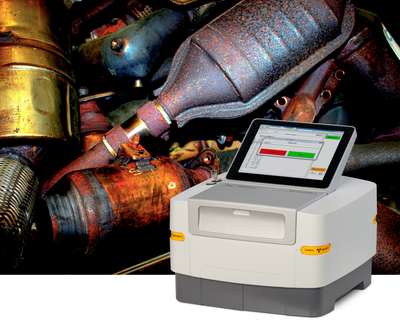
Epsilon 1 for automotive catalysts recycling
Want to get better accuracy and precision from your handheld XRF spectrometer, while keeping your workflow as simple as possible? Our Epsilon 1 ED-XRF spectrometer is here for you.

Learn more about X‑ray Fluorescence (XRF)

As part of the integrated catalyst characterization portfolio, X-ray fluorescence (XRF) provides the quantitative elemental insight required to design, optimize, and control catalyst formulations. Because catalytic activity and stability depend heavily on precise metal loading, promoter levels, and support chemistry, XRF delivers the accuracy and repeatability needed to verify composition at every stage, from raw materials to finished catalysts.
XRF enables researchers to measure bulk elemental composition, confirm active metal loading, detect promoters and modifiers, and identify trace impurities or poisons that impact performance. With robust calibration strategies and high-sensitivity detection, XRF supports both R&D and production environments, ensuring catalysts meet specification and perform consistently across batches. This elemental clarity is essential for correlating composition with activity, selectivity, and long-term durability.
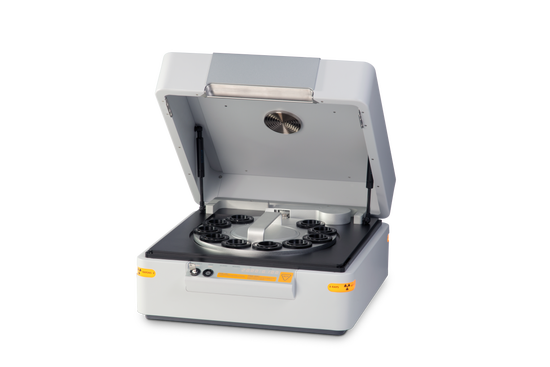
High‑sensitivity benchtop EDXRF analyzers ideal for metal loading, promoters, and trace impurity detection.
Online XRF analysis using Epsilon Xflow. Here the abundance of four catalyst inhibitors (Fe, Ni, V and Cl) in a fluid catalytic cracking (FCC) process are tracked over 30 hours.
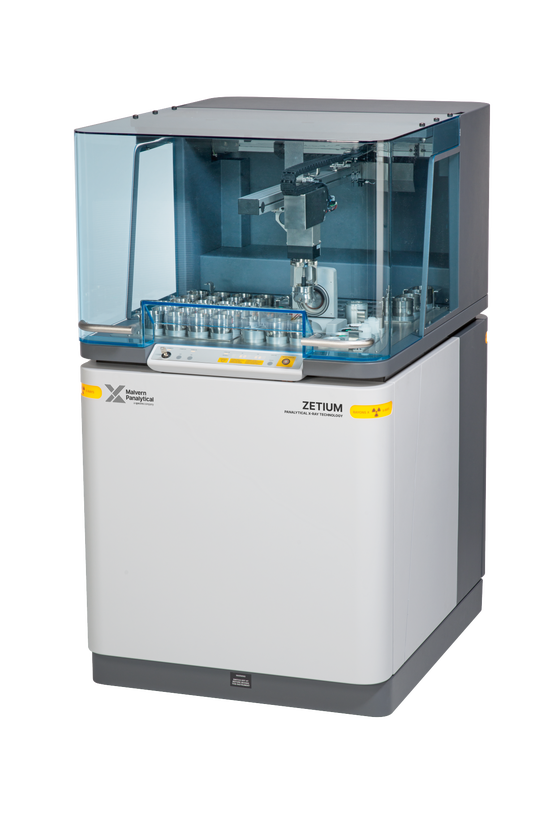
Flagship WDXRF platform offering industry‑leading accuracy, stability, and configurability for advanced catalyst formulation and QA/QC.

A next generation EDXRF platform designed for high throughput, multi matrix elemental analysis with enhanced sensitivity and streamlined workflow automation, ideal for routine catalyst composition and metal loading verification.
Want to get better accuracy and precision from your handheld XRF spectrometer, while keeping your workflow as simple as possible? Our Epsilon 1 ED-XRF spectrometer is here for you.

X-rays are essential for characterizing catalysts by analyzing their structure, surface chemistry, and properties like particle size and porosity to optimize performance and efficiency.
Explore the future of catalysis with experts from industry, academia and standards organizations as they discuss the technologies, market opportunities and innovations driving a more sustainable, lower-carbon future.
