
Chemisorption & Temperature Programmed Methods
Quantifying active site concentration and performance

Learn more about Mercury Porosimetry and Porometry

Mercury porosimetry and porometry provide the critical meso , macro , and through pore insights needed to understand how catalyst bodies behave under real operating conditions. These techniques characterize the pore networks that control bulk transport, pressure drop, mechanical strength, and the ability of shaped catalysts: pellets, extrudates, and monoliths to withstand thermal and mechanical stress. By resolving pore size distributions far beyond the range of gas adsorption, they reveal how macropores and transport channels influence diffusion, accessibility, and overall reactor performance.
Through-pore and flow-based measurements complement intrusion data by quantifying how interconnected the pore network truly is, enabling researchers to evaluate permeability, tortuosity, and structural integrity. Together, these methods provide a complete picture of catalyst form-factor behavior, ensuring that supports and shaped bodies deliver consistent mass transport, durability, and performance across activation, cycling, and scale-up.
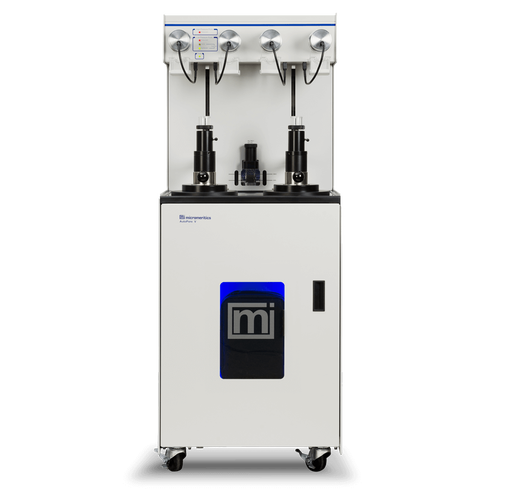
High‑resolution characterization of meso‑ and macropore size distribution, pore volume, and structural integrity. Ideal for evaluating transport channels, mechanical strength, and the pore architecture of shaped catalysts.
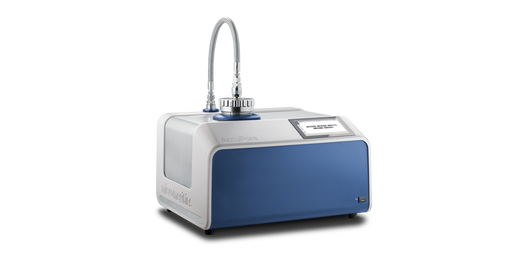
A fully automated chemisorption and temperature‑programmed reaction system for TPR, TPO, TPD, and pulse chemisorption. Provides detailed insight into active site strength, reducibility, oxidation behavior, and reaction mechanisms.
Quantifying active site concentration and performance

Packing behavior, flow performance, and mechanical stability
Meso, macro, and through pore structure for real world catalyst performance

Particle size, shape, flowability, and stability analysis

From bench scale insight to pilot scale confidence

Phase identification and structural evolution

Elemental composition and metal loading
Explore the future of catalysis with experts from industry, academia and standards organizations as they discuss the technologies, market opportunities and innovations driving a more sustainable, lower-carbon future.

