
Future Days: Catalysts, What Will Define the Next Decade of Catalysis?
- Virtual

Learn more about Surface Area & Porosimetry

Surface area and porosity define how catalyst supports interact with active metals and reactants, making them fundamental to dispersion, diffusion, and overall catalytic efficiency. Understanding support pore structure across micro‑, meso‑, and macropores reveals how well metals anchor, how reactants access active sites, and how the support responds to thermal, mechanical, and chemical stress.
These textural parameters directly influence catalyst lifetime, resistance to sintering, and performance under real operating conditions. Gas adsorption and mercury intrusion techniques quantify pore size distribution, pore volume, and structural robustness, enabling researchers to evaluate how supports accommodate metal loading, withstand activation treatments, and maintain integrity during cycling. This insight is essential for designing supports that deliver stable dispersion, controlled mass transport, and predictable behavior in fixed‑bed, slurry, and fluidized systems

A high‑throughput, three‑station gas adsorption analyzer for rapid, reliable BET surface area and mesopore characterization. Ideal for routine QC and R&D environments requiring consistent, multi‑sample throughput.

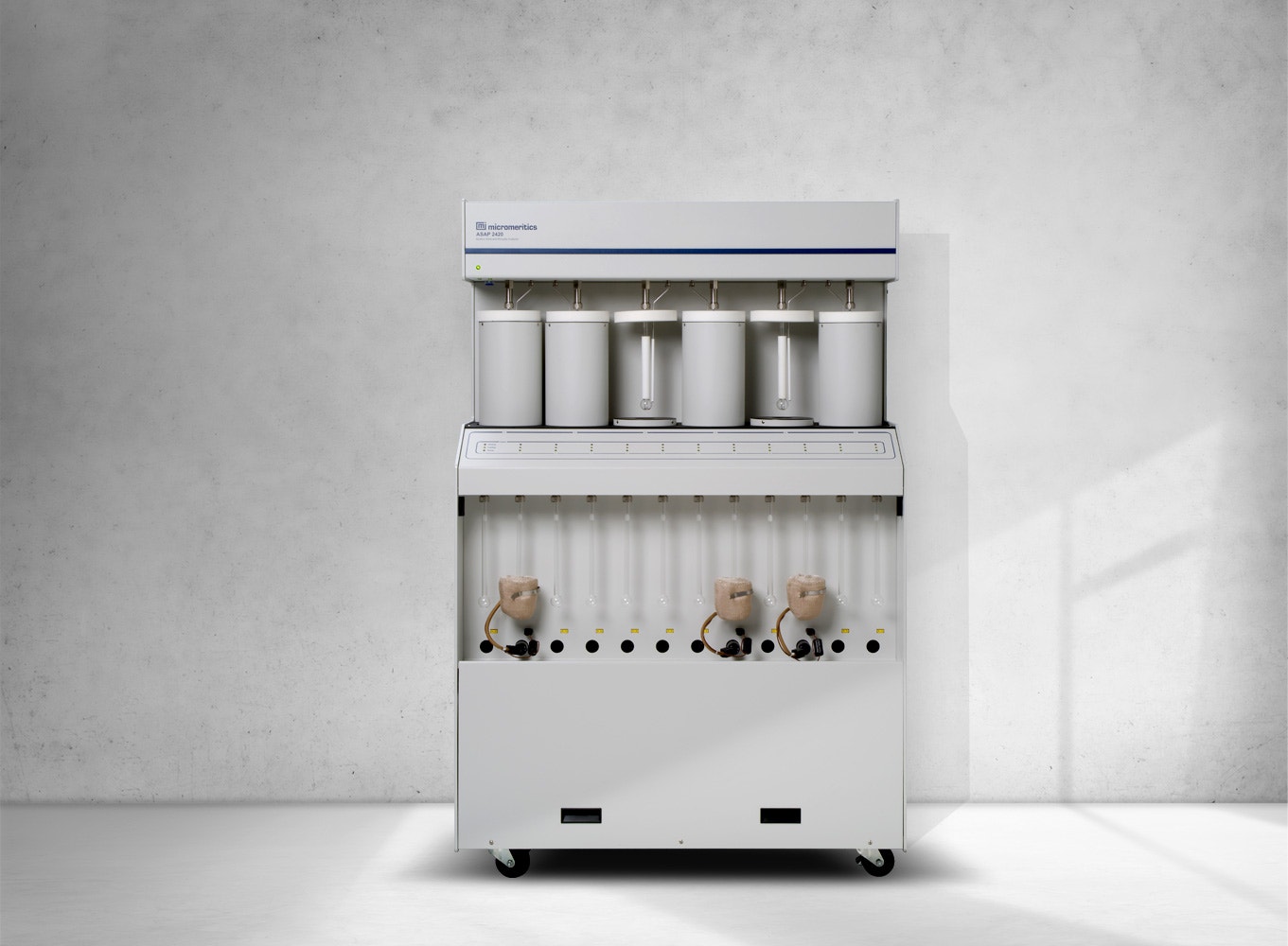
Designed for laboratories with high sample through-put that demand productivity, the ASAP 2460 and ASAP 2425 ASAP 2425 deliver high-throughput gas adsorption analysis for BET surface area and pore size / volume characterization. The ASAP 2460 is a bench top unit that can economically grow with your needs expanding from two to six stations. The ASAP 2425 is a six station floor standing unit incorporating twelve computer controlled vacuum degas stations. Both technologies allow for on-demand analysis making them the ideal choice for busy QC laboratories and data can be exported automatically upon test completion to the customer's LIMS system.

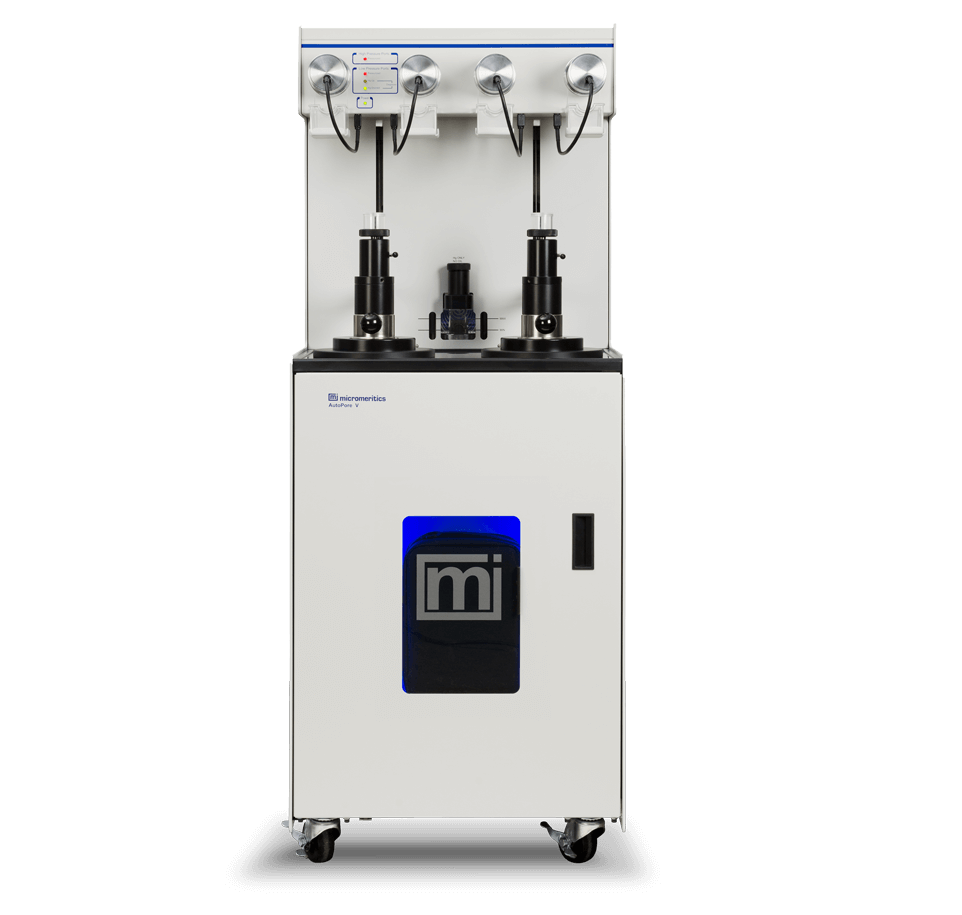
Provides detailed meso‑ and macropore size distribution, pore volume, and structural integrity data. Essential for understanding transport pores, mechanical strength, and the form‑factor behavior of pellets, extrudates, and monoliths.

The 3Flex offers porosity, chemisorption, surface area and temperature-programmed methods.
Explore the future of catalysis with experts from industry, academia and standards organizations as they discuss the technologies, market opportunities and innovations driving a more sustainable, lower-carbon future.

Quantifying active site concentration and performance

Packing behavior, flow performance, and mechanical stability

Meso, macro, and through pore structure for real world catalyst performance

Particle size, shape, flowability, and stability analysis

From bench scale insight to pilot scale confidence

Phase identification and structural evolution

Elemental composition and metal loading