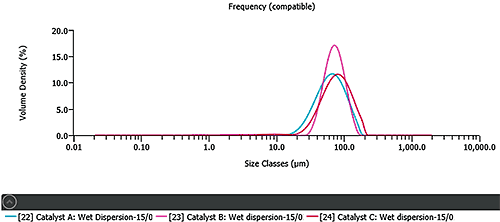
Analysis of catalyst materials using laser diffraction particle size analysis
Predicting catalyst activity and attrition

Learn more about Particle Size & Morphology

As part of Malvern Panalytical’s integrated catalyst characterization portfolio, particle size and morphology analysis provides essential insight into how catalyst powders behave during processing, activation, and operation. Particle size distribution, shape, and surface texture directly influence packing density, flowability, attrition resistance, and mass transfer performance, all factors that determine how catalysts load into reactors, how they fluidize or slurry, and how consistently they perform over time.
Laser diffraction, automated imaging, and nanoparticle characterization techniques quantify size, shape, agglomeration, and stability across nano to millimeter scale materials. These measurements help researchers optimize powder handling, control pellet or extrudate uniformity, minimize pressure drop, and ensure reproducible reactor performance. By linking morphology to flow behavior and mechanical robustness, these tools support both R&D and manufacturing environments where consistency and reliability are critical.

Laser diffraction system for robust, high‑resolution particle size distribution analysis from submicron to millimeter scales.
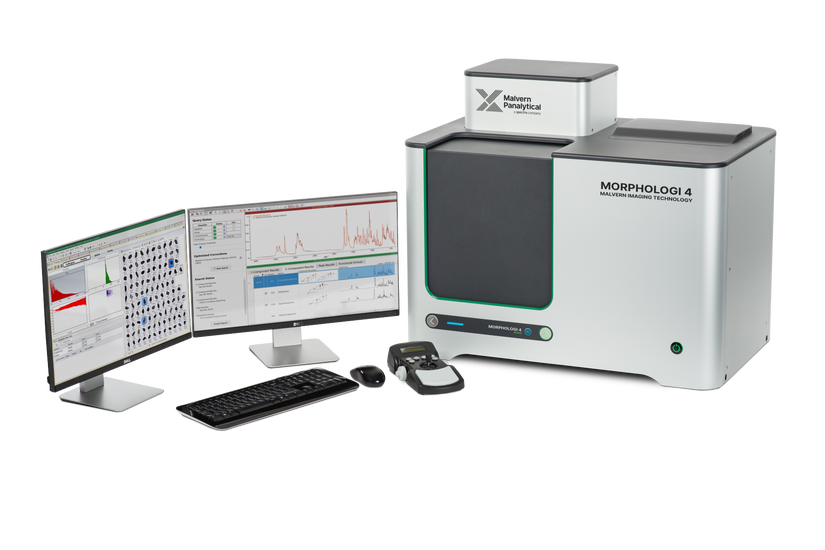
Automated imaging platform for detailed particle shape, size, and morphological classification.

Dynamic light scattering (DLS) and electrophoretic light scattering (ELS) for nanoparticle size, stability, and zeta potential.
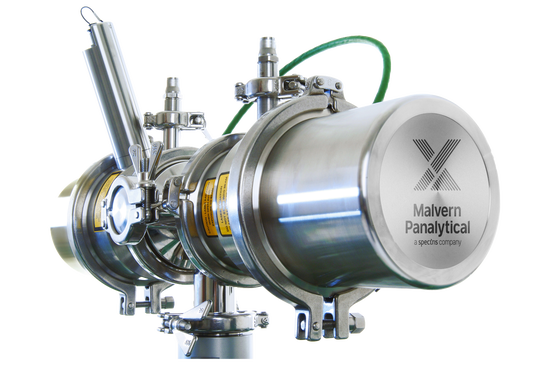
Real‑time, in‑process particle size measurement for continuous manufacturing and process control.
Predicting catalyst activity and attrition

Efficient catalyst design focuses on maximizing reaction rates by optimizing both the size and shape of particles to increase surface area while using less material.
In this video, we explore three key particle shape parameters: elongation, circularity, and convexity.
Explore the future of catalysis with experts from industry, academia and standards organizations as they discuss the technologies, market opportunities and innovations driving a more sustainable, lower-carbon future.
